
From Jan Dul (Rotterdam School of Management, Erasmus Univ):
This year’s online summercourse on Necessary Condition Analysis (NCA) offered by Erasmus Research Institute of Management, Rotterdam, Netherlands is fully booked. Because we had to disappoint many researchers including QCA researchers, we decided to organize in the next few months some a few specialized webinars or short courses about specific NCA topics. One of them will be on combining NCA with QCA. We will discuss differences between NCA and QCA and how NCA can enrich QCA. Please let us know if you are interested by sending an email to nca.communication@erim.eur.nl. As soon as more information is available we will inform you personally about the details.
New Manuscript on Necessary Conditions Analysis (NCA)
Jan Dul (Rotterdam School of Management, Erasmus Univ) has published a new methodological text Conducting Necessary Condition Analysis for Business and Management Students (Sage, 2019).
Peer Fiss Receives Named Chair
Peer Fiss (Marshall School of Business, Univ. of Southern California) has been appointed as the Jill and Frank Fertitta Chair in Business Administration. As noted in the announcement of his appointment, special mention was made of Peer’s many innovative contributions to the development of QCA, particularly within the field of management research. We congratulate Peer on this honor!
COMPASSS.org Hacked
Last week, the COMPASSS website was subjected to an automated attack. We don’t have any sensitive information on the site, so there’s no risk of a data breach. I’ve since restored the site and everything should be fixed. However, if you find a broken link or run into any problems, please email me at rubinsonc@uhd.edu
New Monograph by Felix Schulte
Felix Schulte (Heidelberg University) has published Peace Through Self-Determination: Success and Failure of Territorial Autonomy (Palgrave MacMillan, 2020).
Bringing together comparative politics, conflict research and social psychology, this book presents a novel theory to explain the consolidation outcomes of post-conflict autonomy arrangements. It builds on Social Identity Theory and identifies a successful process of ethnic recognition as the key prerequisite for peaceful interethnic cohabitation through territorial self-governance. As this process is highly context-dependent, the study identifies relevant structural and actor-centered factors and analyzes their occurrence in the consolidation periods of nineteen autonomy arrangements worldwide using Qualitative Comparative Analysis (QCA). The author concludes that elites accept autonomy reforms if they promise a high degree of self-determination and, at the same time, ethnic recognition is not hindered by horizontal inequalities. Bargaining efforts succeed within inclusive institutions involving non-nationalist parties and international organizations. Autonomy reforms fail if the degree of self-rule offered is too low and strong inequalities generate new grievances. Autocratic rule, nationalist parties, and a lack of international attention provide a breeding ground for further centrifugal activities. In-depth case studies on South Tyrol and the Chittagong Hill Tracts provide further evidence for the theoretical models.
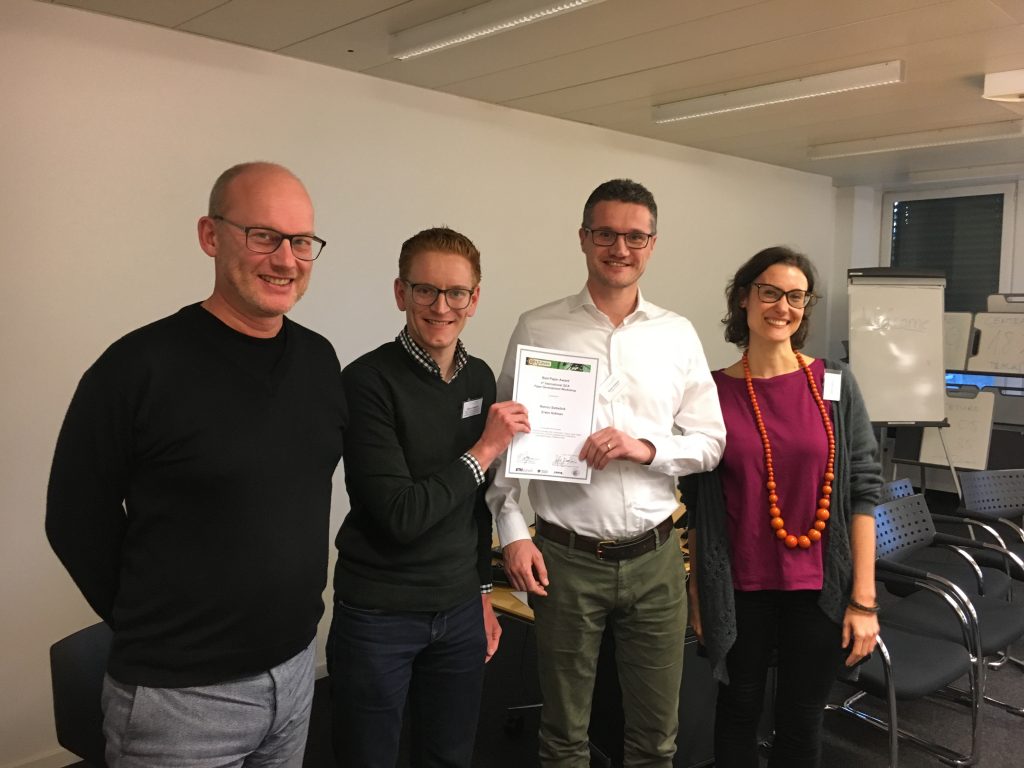
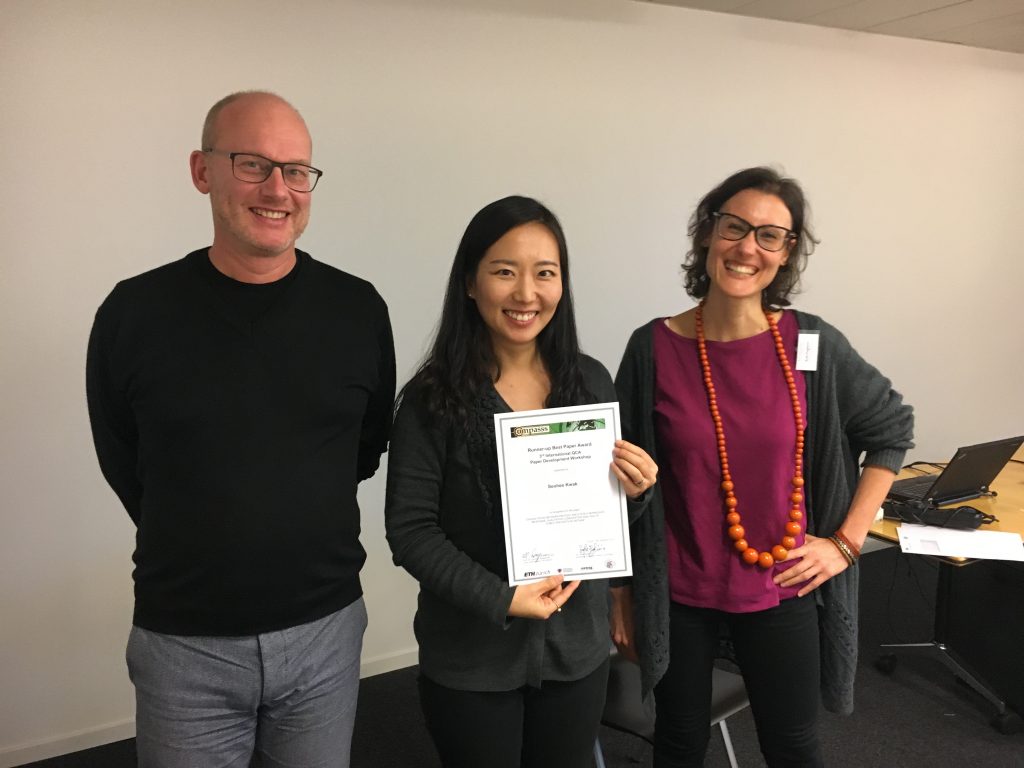
Best Papers of the 3rd International QCA Paper Development Workshop
The 3rd International QCA Paper Development Workshop, held on the 11th and 12th of December at ETH Zürich, introduced awards for the best working papers accepted to the workshop. A collaboration between the workshop organizers and COMPASSS, we are excited to recognize the outstanding work produced by these scholars and are grateful for the efforts of members of the COMPASSS Awards Committee, who completed the review and selection process under a tight deadline:
- Konan Seny Kan (University of Otago)
- Karina Kosmukhambetova (Goethe University Frankfurt)
- Seraphine Maerz (Central European University)
- Sofia Pagliarin (University of Bamberg)
- Martyna Swiatczak (German University of Administrative Sciences, Speyer)
- Claudius Wagemann, chair (Goethe University Frankfurt)
Best Paper
Remco Siebelink and Erwin Hofman (Twente University) in recognition of the paper “Individual Cognitive Capabilities, Strategy Tools, and their Impact on Strategic-Option Generation: Toward a Configurational Perspective”
Runner-ups
Seohee Kwak (Erasmus University Rotterdam) in recognition of the paper “Causal Paths between Protest and State’s Repressive Response: Qualitative Comparative Analysis of Public Protests in Vietnam”
Adélie Ranville (Grenoble Ecole de Management) in recognition of the paper “Participation Patterns and Drivers of Participation to the Governance in New Cooperative: The Case of an Energy Cooperative in France”
Postdoc in Causal Modeling
The University of Bergen is accepting applications for a 3-year post doctoral position on the project “Boolean Causal Modeling with Coincidence Analysis,” headed by Michael Baumgartner.
Please note that although the position is housed within the Department of Philosophy, it specifically requires a scientific background in “a scientific discipline relevant for the application of Boolean methods, e.g. social/political science, economics, biology, medicine or psychology.”
For details and to apply, see: https://www.jobbnorge.no/en/available-jobs/job/177227/postdoctoral-fellowship-in-causal-modeling
CfP: Special Issue of Sustainability on conflicts and natural resources with A focus on QCA
Dr. Matteo Roggero (Humboldt University Berlin) will be co-editing a special issue of Sustainability with the title “Natural Resources Management and Conflicts in the Context of Sustainability Transformation.” Particularly welcome are empirical submissions using QCA and set-theoretic methods. The call is now open, with a deadline of August 31, 2020. Details are available at: https://www.mdpi.com/journal/sustainability/special_issues/nat_resour_manag_confl_sus_transform
Carsten Schneider Wins APSA’s David Collier Mid-Career Achievement Award
Carsten Schneider (Central European University) has won the David Collier Mid-Career Achievement Award by the Qualitative and Multi-Method Research Section of the American Political Science Association (APSA). Congratulations!
New Working Paper
New working paper published by Lotte Dalgaard Christensen (Dept of Environmental Science, Aarhus University), “When Bioeconomy Policy Objectives (Fail To) Overlap: Rethinking the analysis of necessity to detect causal interdependencies among sustainable development goals in the Nordic bioeconomy strategy”
See the Working Papers page.